
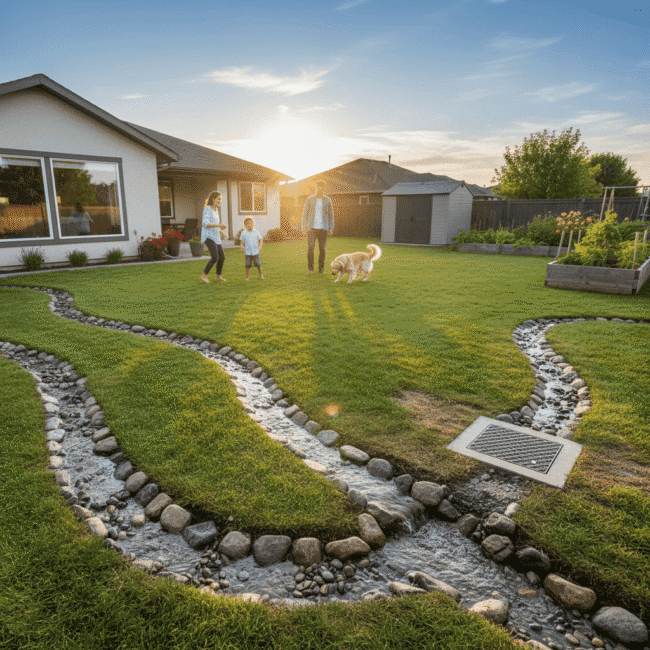
A soggy yard is more than just a nuisance. It is a breeding ground for problems. I have seen countless homes suffer from water damage because of neglected drainage issues. Standing water can ruin your beautiful landscaping and it can also threaten the very foundation of your home. It creates an unhealthy environment for your family and your pets.
Many homeowners ignore the early signs of poor drainage. They think a little puddling after rain is normal. But this small issue often grows into bigger more expensive repairs down the line. We aim to show you how to identify these problems and what steps you can take to make sure you have no more soggy yard fix drainage problems today.
Addressing these issues quickly saves money and stress. It protects your property and improves your outdoor living space. Fixing drainage means creating a healthier safer home environment. I will walk you through common causes practical solutions and professional options to get your yard dry and healthy.
Understanding What Causes a Soggy Yard
Identifying the root cause of a soggy yard is the first step toward a lasting solution. Water collects for many reasons and each cause needs a specific fix. I often see homes where the land naturally slopes toward the house. This directs all rainwater right against the foundation. It is a common problem especially in older neighborhoods.
Another big culprit is compacted soil. This soil does not absorb water very well. Instead water sits on top creating puddles. Heavy clay soils are particularly prone to this issue. Over time walking and driving on the lawn compresses the soil even further. This makes drainage worse and hurts grass growth.
Poor Grading and Landscape Design
The way your yard is shaped plays a huge role in how water moves or sits. If the ground around your house slopes incorrectly it pushes water toward your foundation. This is poor grading. Proper grading should gently slope away from the house on all sides. I always check for this first because it often makes a significant difference.
Sometimes landscape features like garden beds or patios can trap water if not designed with drainage in mind. Retaining walls can block natural water flow if they lack proper weep holes or drainage behind them. We need to consider how every part of your yard interacts with water to truly solve a soggy lawn problem.
Gutters and Downspouts Gone Wrong
Your gutters and downspouts are the first line of defense against excess rainwater. If they are clogged with leaves and debris they cannot do their job. Water overflows and pools right around your house. This creates immediate soggy spots and can even lead to basement flooding.
Even clean gutters can cause problems if downspouts discharge too close to the foundation. Downspout extensions are often overlooked but they are critical. They should carry water at least five to ten feet away from your home. This simple adjustment can prevent a lot of water from ever reaching your yard’s vulnerable areas. It is an easy fix that makes a big impact on preventing a soggy mess.
The Hidden Dangers of Poor Yard Drainage
A constantly wet yard is more than an inconvenience. It can lead to serious hidden dangers for your home and health. I have seen many instances where homeowners underestimated the damage that standing water causes. These issues silently erode property value and create hazardous conditions. It is important to know the full scope of potential problems.
Ignoring poor drainage today can lead to costly repairs tomorrow. Small puddles might seem harmless. But they are often indicators of larger underlying problems that require attention. We work to educate homeowners about these risks so they can make informed decisions for their properties.
Foundation Damage and Structural Weakness
Water pooling around your home’s foundation is a major red flag. Over time this constant moisture can cause the soil to expand and contract. This puts immense pressure on your foundation walls. It leads to cracks bowing and even structural shifts. I have witnessed basements flood and concrete slabs buckle because of consistent water saturation.
Repairing foundation damage is one of the most expensive home repairs. It disrupts your life and costs a lot of money. The integrity of your entire house relies on a stable foundation. Good drainage protects this critical component. It helps maintain the long-term stability and safety of your home.
Pest Infestations and Health Risks
Soggy areas are perfect breeding grounds for various pests. Mosquitoes lay eggs in standing water which can lead to larger insect populations and increased risk of mosquito-borne diseases. I also see an uptick in rodent and insect activity in damp conditions. They seek shelter and moisture in wet soil and crawl spaces.
Furthermore persistent dampness can encourage mold and mildew growth. This presents serious health risks especially for people with allergies or respiratory conditions. Mold spores can easily enter your home through windows and doors. They spread quickly in humid environments. A dry yard supports a healthier living space for everyone.
Simple Solutions for Minor Water Problems
Sometimes you do not need a major overhaul to fix a slightly soggy yard. I often advise homeowners to start with simple, cost-effective solutions. These small changes can make a surprising difference in how water moves through your property. They are easy to implement and can prevent minor issues from becoming large problems. I believe in tackling the easiest fixes first.
These straightforward methods focus on improving surface flow and encouraging water absorption. They are perfect for areas with occasional puddles or slow drainage after a light rain. Many of these solutions you can do yourself in an afternoon. This empowers you to take control of your yard’s health.
Improving Surface Drainage
One of the simplest ways to help water drain away is to reshape the surface of your lawn. This is called regrading. You can add a thin layer of soil to create a gentle slope. This directs water away from low spots and toward areas where it can safely drain. I have seen this work wonders for small persistent puddles.
Another option is to create small swales or shallow ditches in your yard. These channels guide water towards a storm drain or a drier part of your property. You can also plant vegetation that absorbs a lot of water in problem areas. These plants help dry out the soil naturally. They add beauty to your landscape as well.
Adjusting Downspouts and Cleaning Gutters
Regular gutter maintenance is non-negotiable for good drainage. Clogged gutters overflow causing water to cascade right next to your foundation. I always recommend cleaning your gutters at least twice a year. Once in the spring and again in the fall.
Once your gutters are clear check your downspouts. Make sure they extend far enough away from your house. Ideally water should discharge at least five feet from the foundation. You can buy flexible downspout extensions at any hardware store. These inexpensive additions redirect water effectively. They help keep your basement and foundation dry.
When to Call in the Professionals for Serious Drainage Issues
While many minor soggy yard problems can be tackled with DIY solutions, some situations demand expert intervention. I know it can be tempting to try and fix everything yourself. But ignoring the signs of severe drainage problems can lead to much larger headaches and expense. Recognizing when to call a professional is a smart move for any homeowner.
Professional drainage experts have the knowledge tools and experience to diagnose complex issues. They can implement solutions that go beyond surface-level fixes. I always recommend getting a professional assessment if you are dealing with persistent standing water or signs of structural damage. Their expertise protects your home and your investment.
Persistent Standing Water and Water Damage Signs
If you have standing water that lingers for more than 24 hours after a rainstorm, it is a sign of a serious drainage problem. Large persistent puddles indicate that your soil simply cannot absorb water or that the grading is severely wrong. I have seen these conditions lead to saturated lawns and dying plants.
Look for other signs of water damage around your home. This includes cracks in your foundation, water stains in your basement or crawl space, or noticeable settling of concrete patios or walkways. These are clear indicators that water is causing damage. A professional can assess the extent of the problem and recommend appropriate yard drainage solutions.
Complex Grading and Soil Issues
Sometimes the problem is not just a simple slope. It is a complex grading issue that requires specialized equipment and knowledge to fix. If your yard is very flat or slopes significantly toward your home, it needs professional regrading. This involves moving a lot of soil and ensuring precise measurements for effective water flow.
Highly compacted or heavy clay soils can also pose challenges that are hard for a DIYer to overcome. A professional can perform soil tests to understand its composition. They can recommend specialized techniques like deep tilling or adding soil amendments to improve permeability. They might also suggest advanced drainage systems that work better with your specific soil type.
Effective Landscape Drainage Systems
When simple fixes are not enough, installing effective landscape drainage systems becomes crucial. These systems are designed to manage larger volumes of water and direct them away from your home and landscaping. I have seen these solutions transform waterlogged properties into dry usable spaces. They are an investment that pays off by protecting your property and enhancing its value.
The right drainage system depends on your specific yard conditions and the amount of water you need to manage. There are several proven options that can tackle everything from heavy rainfall to persistent groundwater issues. We help homeowners understand which system will work best for their unique situations. Choosing the correct system is key.
French Drains for Subsurface Water Control
A French drain is one of the most popular and effective solutions for subsurface drainage. It is a trench filled with gravel and a perforated pipe. The pipe collects water that seeps into the ground and redirects it to a suitable discharge point. I often recommend French drains for areas with consistently wet soil or where water collects underground.
These drains are particularly good at preventing water from reaching your foundation or pooling in low-lying areas. They capture water before it causes damage. The gravel and pipe work together to create an efficient path for water to flow freely. This system is hidden beneath the surface so it does not interfere with your lawn’s aesthetics.
Catch Basins and Dry Creek Beds
Catch basins are square or round grates installed at surface low points. They collect surface runoff water and direct it into an underground pipe system. These are perfect for managing large amounts of water from driveways patios or other hardscapes. I use them when visible standing water is the primary problem. They quickly funnel water away.
Dry creek beds are another visually appealing and functional drainage solution. They are natural-looking channels made of rocks and gravel. They are designed to mimic a dry streambed. When it rains, they guide water across your property to a safe discharge area. They add a beautiful landscape feature even when dry. They are a good choice for managing surface runoff in a visually pleasing way.
Maintaining Your Drainage System for Long-Term Success
Installing a proper drainage system is a significant step but maintenance ensures its long-term effectiveness. Just like any other home system, drainage solutions need occasional care to perform at their best. I always tell my clients that ongoing maintenance is not an option. It is a necessity. Neglecting it can lead to system failure and recurring water problems.
Regular checks and cleaning can prevent small issues from becoming costly repairs. This proactive approach saves you money and keeps your yard dry year after year. We provide guidance on simple maintenance tasks that homeowners can easily perform themselves. Keeping your drainage system in top shape guarantees a drier healthier outdoor space.
Regular Inspections and Cleaning
Inspect your drainage system regularly especially after heavy rainfall. Check catch basin grates for debris like leaves and twigs. Clean them out immediately to prevent blockages. I recommend a thorough cleaning of all visible components at least once a season.
For French drains pay attention to any signs of slow drainage or pooling water above the trench. This could mean the pipe is clogged or the gravel needs refreshing. Clearing blockages and ensuring clear pathways for water are critical steps. This makes sure your system continues to work as intended.
Seasonal Checks and Preventative Measures
Perform seasonal checks to anticipate potential problems. In the fall clear leaves from gutters and drainage paths before they accumulate. In the spring check for any damage from winter weather like frozen pipes or shifted soil. I often find that preventative measures save homeowners from big headaches later on.
Consider installing gutter guards to minimize leaf debris. Regularly aerate your lawn to improve soil absorption. Directing downspouts away from flowerbeds can reduce overflow into drainage systems. These simple habits keep your drainage system working efficiently. They protect your home from water damage all year round.
No More Soggy Yard Fix Drainage Problems Today: Taking Action for a Drier Home
Living with a soggy yard can feel like a constant battle against nature but it does not have to be this way. I have shown you how standing water creates major risks including foundation damage and pest infestations. We discussed various solutions from simple surface adjustments to advanced French drain installations. Taking action now protects your home and improves your quality of life. You deserve a yard that is healthy and enjoyable not a muddy mess.
Whether you choose to tackle minor issues yourself or call in the professionals for more complex problems, the key is to act decisively. Do not wait for the next big rainstorm to highlight your drainage deficiencies. Small problems often grow larger and more expensive with time. A dry yard supports vibrant landscaping and a stable foundation. It also creates a safer environment for your family.
We believe every homeowner can achieve a dry functional outdoor space. Start by observing your yard identifying problem areas and choosing the right solution. If you need help do not hesitate to reach out to experts who can provide a comprehensive assessment and implement effective drainage systems. Let us work together to ensure you have no more soggy yard. Fix drainage problems today and reclaim your outdoor living space for good.